Retail Media Growth Summit 2026: From retail media to commerce media
Posted on Thursday 11 June 2026 | Beatriz Vieira - Head of Comms, IAB UK
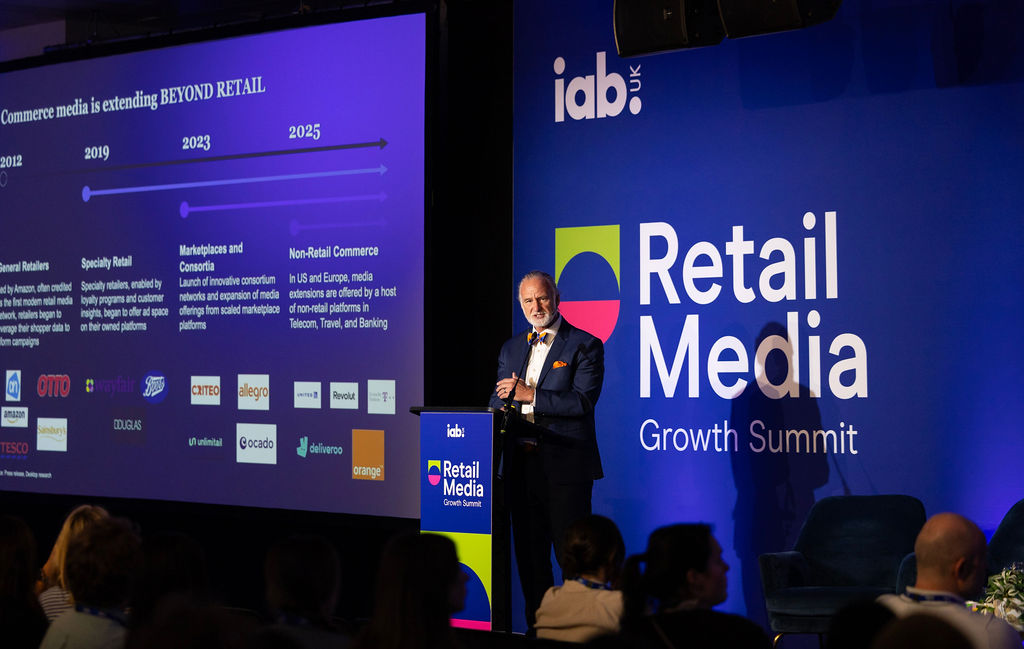
Retail media has spent the past few years establishing itself as one of the fastest-growing areas of digital advertising. But if there was one message that emerged from IAB UK's Retail Media Growth Summit, it's that the industry is entering a new phase.
The conversation is no longer about whether retail media works. Instead, attention is shifting to bigger questions around measurement, interoperability, AI and how retail media evolves into something broader: commerce media.
Bringing together speakers from IAB Europe, Tesco Media, United Airlines MileagePlus, Particular Audience, WPP, The Trade Desk, Uber, Amazon Ads, L'Oréal, SMG, McKinsey and more, the summit explored the opportunities and challenges that will shape the next chapter of growth.
Retail media is growing up
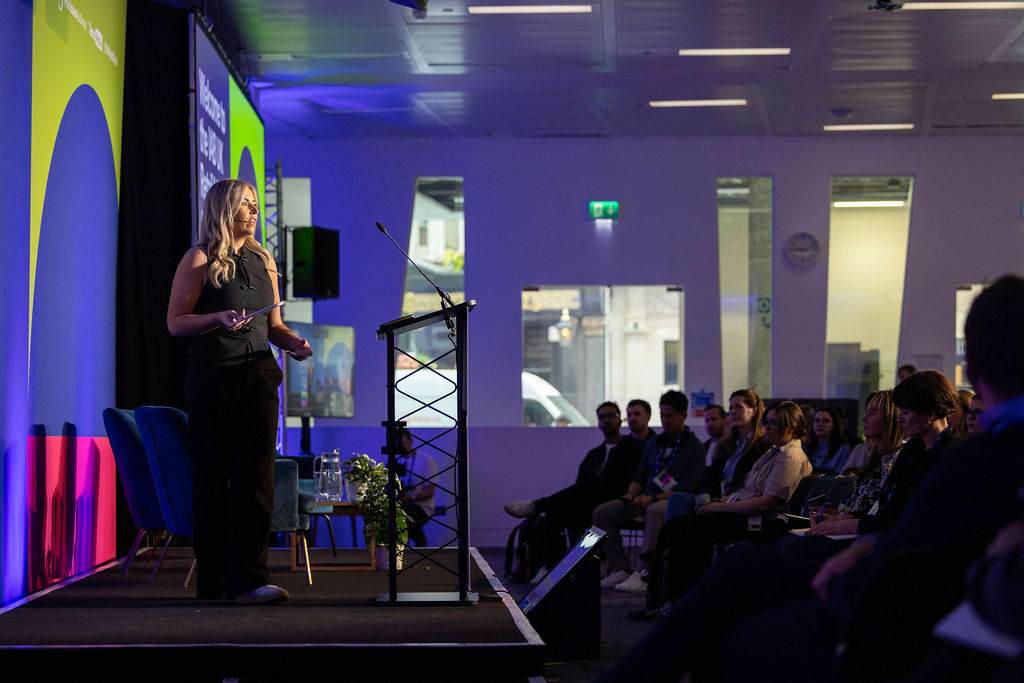
Opening the day, Olivia McCullagh, Retail Media Lead at IAB UK, highlighted the growing role retail media plays across the consumer journey.
During a recent survey conducted by the IAB, retail media is increasingly influencing upper-funnel outcomes too, with 73% of consumers saying retail media helps make them aware of brands and 35% researching products after online seeing them in-store.
That shift was reinforced by Dr Daniel Knapp, Chief Economist at IAB Europe, who argued that retail media has moved beyond its own industry bubble. "Retail media is now being discussed on earnings calls," he explained. "CEOs and CFOs are increasingly viewing it as a strategic business driver rather than an additional marketing channel."
Knapp also highlighted the growing importance of offsite retail media, the rise of AI across the ecosystem and the need for retailers to focus on fundamentals before pursuing further scale. With more than 140 retail media networks operating across EMEA, consolidation appears increasingly inevitable.
Commerce media is the next frontier
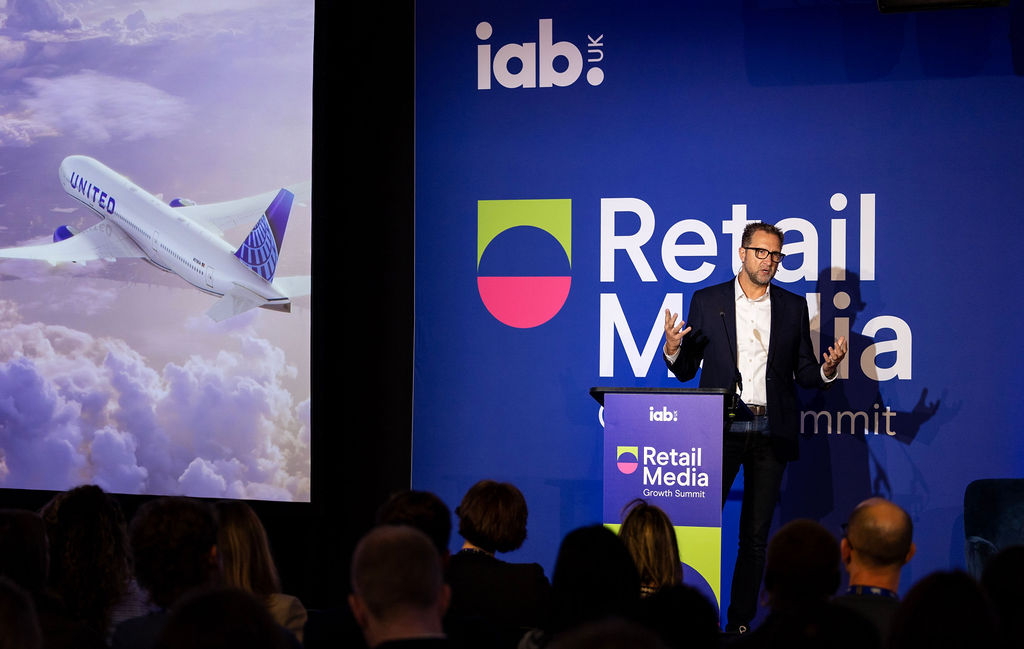
One of the most talked-about sessions came from Richard Nunn, former CEO of United Airlines MileagePlus, who shared the story behind Kinective Media, the world's first travel media network.
His central argument was simple: every commerce business is becoming a media business. Across the US, companies spanning finance, gaming, telecoms, pharmacies and travel have launched media networks, recognising that their most valuable asset isn't inventory, but their customer relationships. United Airlines alone has relationships with 108 million customers, creating opportunities to connect loyalty, identity, data and media across the travel journey.
Nunn outlined six lessons from building Kinective Media, including the importance of starting with strategy rather than ad inventory, investing in specialist talent, prioritising data governance and launching media businesses as products rather than internal initiatives. His closing thought resonated throughout the day:
"Retail media is just the beginning. The real opportunity is commerce media - where loyalty, identity, data and AI converge."
The planner's role is changing
If commerce media represents the future, who will connect the dots?
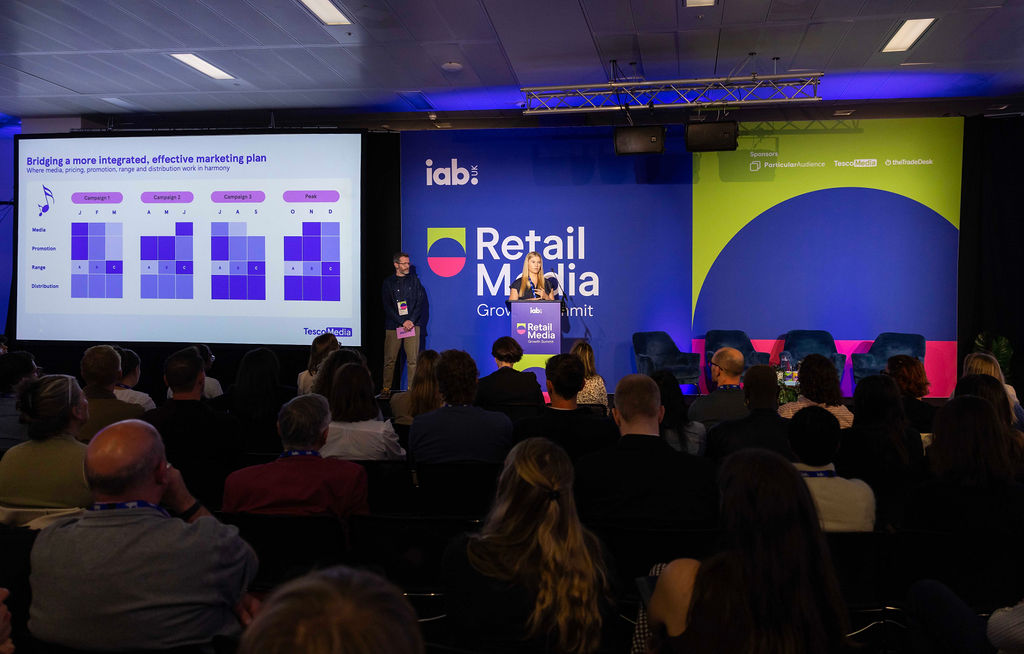
According to Tesco Media's Steve Edwards and Justine Baloh, the answer is the modern planner. Their session argued that planners are evolving from channel specialists into growth orchestrators, responsible for connecting media, pricing, promotion, distribution and customer intelligence. Growth, they suggested, comes not from individual channels but from understanding how all commercial levers work together.
One particularly striking insight came from Tesco's shopper research. Consumers now switch shopping mindsets an average of 2.5 times during a shopping journey, moving between emotional and rational decision-making. The opportunity for brands lies not simply in knowing who to reach, but understanding when and how to influence decisions.
Rethinking the shopper journey
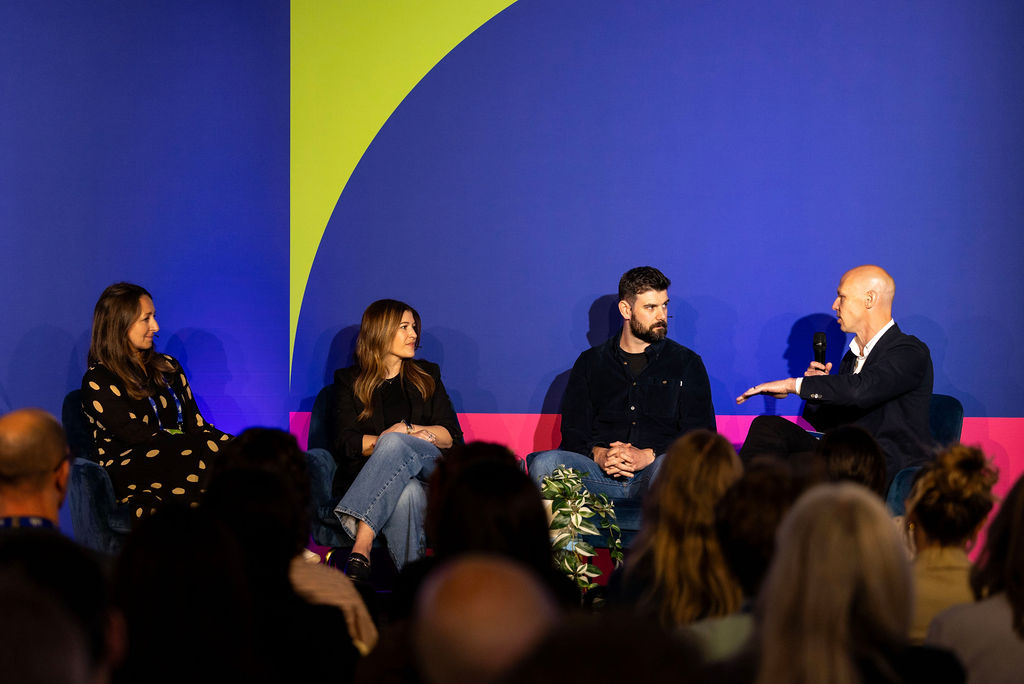
One of the day's liveliest debates came during a panel hosted by IAB UK's James Chandler, joined by Uber’s Faye Jackson, WPP’s Naomi Boonin and dentsu’s Matthew Higgins. The discussion centred on a deceptively simple question: where does retail media actually fit in today's media plan? While retail media has established itself as a key growth channel, panellists argued that its future lies in becoming more integrated with wider marketing and commercial strategies. Several questioned whether "retail media" is still the right term at all, suggesting that a broader commerce media mindset better reflects the increasingly connected relationship between media, shopping and consumer behaviour.
That focus on consumer behaviour was brought to life by Ellie Prendergast from Co-op Media Network, who encouraged delegates to think less about categories and more about shopper missions. Using her "Girl Dinner" example, she demonstrated how convenience shopping is often driven by inspiration rather than planning, with 68% of shoppers entering stores without a list and only half of those who do bring one sticking to it. For brands, the opportunity lies in understanding the mindset behind the mission and influencing decisions at the point they're being made.
Measurement remains retail media's biggest challenge
While retail media's measurement capabilities have long been cited as one of its biggest strengths, several sessions highlighted the industry's growing frustration with inconsistency and fragmentation.
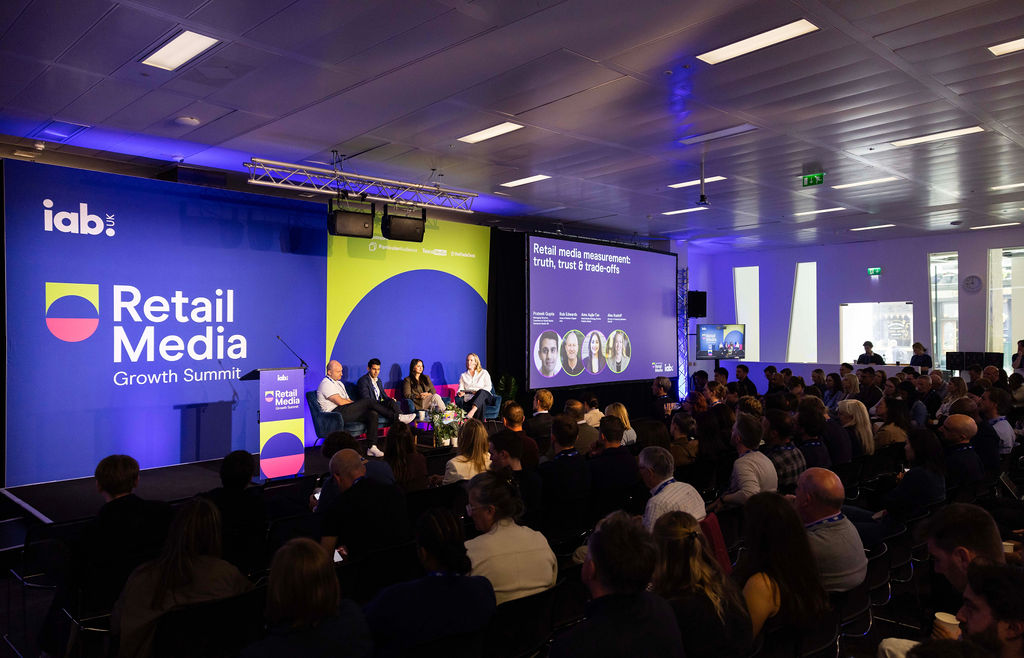
A panel featuring our Director of Industry Relations, Alex Kozloff, Omnicom Media Group’ Prateek Gupta, Arla’s Rob Edwards and Publicis Media’ Amo Aujla-Tse explored the widening gap between the promise of measurement and today's reality.
The challenge isn't necessarily a lack of data. Rather, it's the absence of consistent methodologies, comparable metrics and joined-up frameworks that allow brands to evaluate performance across retailers and channels.
The panel agreed that retail media needs to move beyond vanity metrics and develop more holistic approaches that measure genuine business outcomes and commercial growth. Standards, collaboration and transparency emerged as recurring themes.
Unlocking the value of retail data
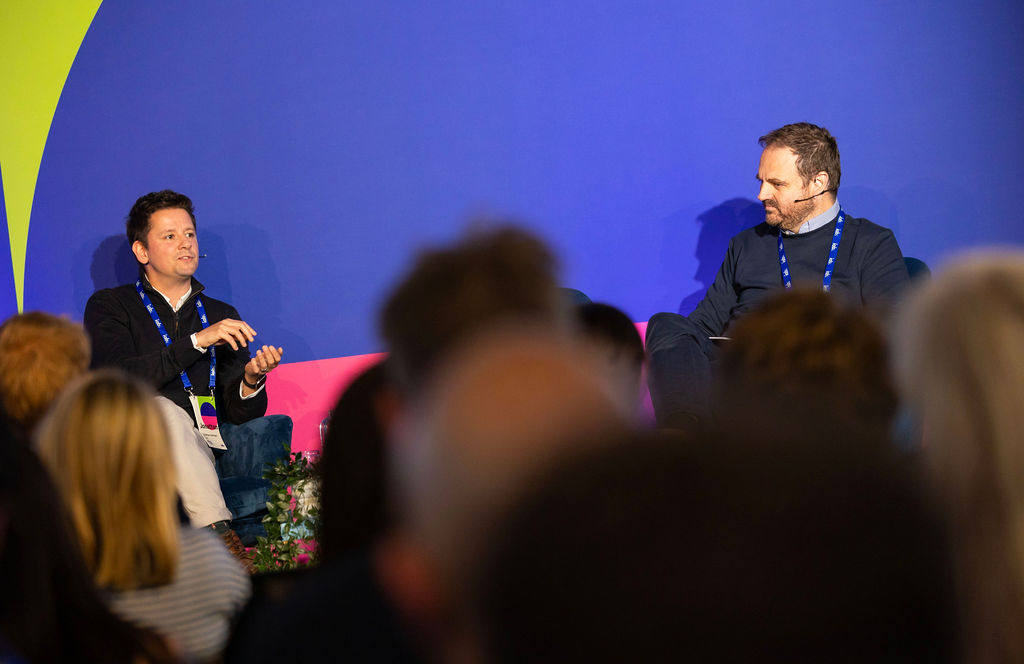
If measurement is retail media's biggest challenge, retail data remains one of its greatest opportunities. Tim Abraham from The Trade Desk and Jonny Harrison from the7stars explored how retailers' first-party data is increasingly informing broader media strategies, helping brands understand audiences and behaviour beyond individual retail environments. However, fragmentation continues to limit its full potential. The pair highlighted the need for simpler activation, more consistent measurement and a clearer view across retailers, arguing that the industry must make retail data easier to access, compare and apply if it is to become a truly scalable planning tool.
AI is reshaping everything
No discussion about the future of retail media would be complete without AI.
Throughout the day, speakers repeatedly returned to the ways AI is transforming discovery, targeting, optimisation and commerce itself.
Amazon Ads' Paul Hackwell shared examples of how AI-powered tools are simplifying campaign creation and optimisation, while Aurélie Nerbusson from L'Oréal UKI discussed how connected commerce experiences can bring together content, creators and shopping in increasingly seamless ways. One case study demonstrated a 5.3x improvement in ROAS from interactive video formats, while Amazon Live generated purchase rates 17 times higher than traditional approaches.
Meanwhile, Beth Smith of Particular Audience warned that search is being fundamentally rewritten. With 89% of retailers still lacking advanced targeting capabilities, she argued that retailers must move beyond traditional keyword-based approaches and take greater control of the decisioning layers that increasingly shape product discovery. Her warning was stark:
"Without decisioning layers, you're letting LLMs guess your commercial priorities."
Retail media's awkward teenage years
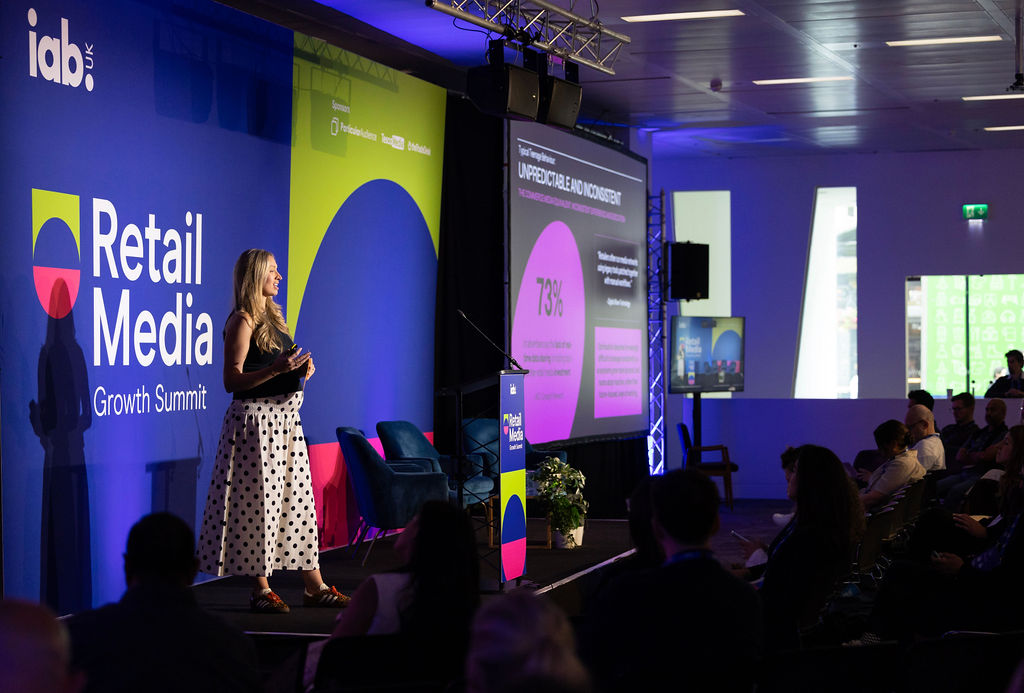
Claire Trbovic from SMG perhaps delivered the day's most memorable analogy, describing retail media as being in its "gangly teenage phase."
Rapid growth has created enormous opportunities, but also fragmentation, inconsistent experiences and operational complexity. The statistics highlight the scale of the challenge:
-
55.4% of advertisers cite interoperability as a major barrier
-
73% say a lack of real-time data sharing is holding back investment
-
67% struggle to prove incrementality
-
68% cite buying complexity as a key obstacle to growth
The solution, Trbovic argued, lies in greater interoperability, self-service capabilities, AI-powered optimisation and stronger technology foundations that make participation easier for advertisers and partners alike.
Looking ahead to 2030
Closing the summit, Craig Macdonald from McKinsey & Company looked ahead to the future of commerce media.
According to his predictions, AI will become a fundamental catalyst for growth, transforming everything from media buying and creative development to discovery and purchase decisions. Commerce media will continue expanding beyond retail into sectors including travel, financial services and telecoms, while agencies increasingly operationalise AI-powered planning and buying. Perhaps the most thought-provoking takeaway came in his final question to the audience:
"The most important customer in commerce media may soon not be a human, but an AI agent acting on their behalf. When that agent makes a decision, will it choose you?"
In short
If one thing became clear throughout the day, it's that retail media is evolving into a broader commerce ecosystem that connects media, data, loyalty, technology and customer experience.
The opportunities remain significant, but future success will depend on solving persistent challenges around measurement, standards, interoperability and trust. At the same time, AI is accelerating change across every part of the ecosystem, creating new opportunities for those willing to adapt. Retail media has entered its maturity phase, and by 2030 we’re predicting all media will be retail media.
Related content
The Last Thursday Club: The Creator Shift
Learn more
AI Growth Summit 2026: Highlights
Learn more
Retail Media’s £3.8bn moment: why advertisers are rewriting the rules of media investment
Learn more
Techtonic - one day, one message: the future is agentic, but built on standards
Learn more
State of AI in Advertising: Charting the Shift from Automation to Autonomy
Explore how AI is reshaping advertising, from autonomous systems to changing consumer discovery, with key findings, deeper analysis and latest industry commentary in this report